
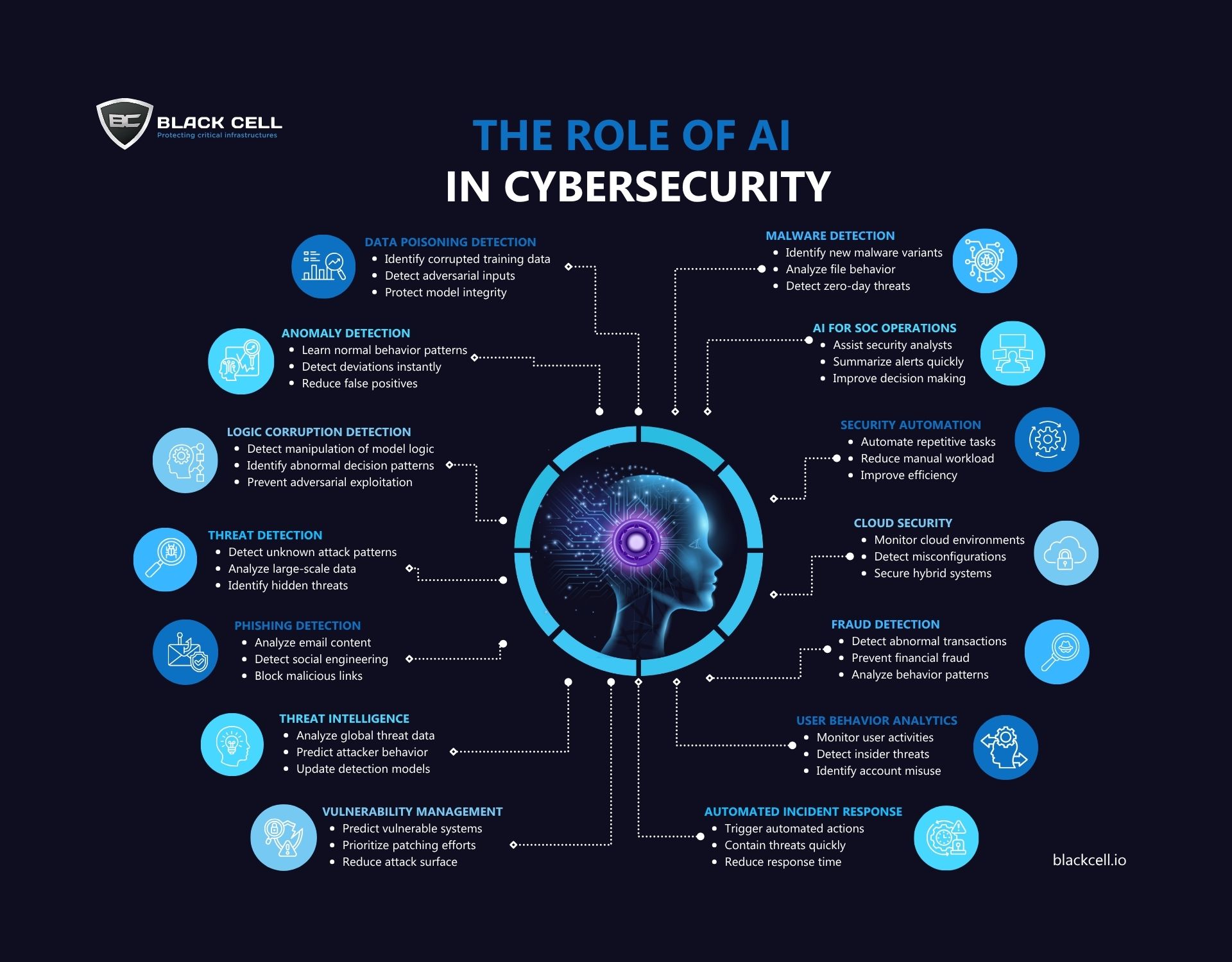
Artificial intelligence is transforming cybersecurity by helping organizations detect threats faster, reduce manual workload, and improve response capabilities. As cyberattacks become more sophisticated, AI enables security teams to move from reactive defense to proactive protection.
AI supports cybersecurity in many ways – from identifying malware variants and phishing attempts to detecting anomalies, insider threats, and suspicious behavior patterns. It also strengthens Security Operations Centers (SOCs) by helping analysts prioritize alerts, automate repetitive tasks, and accelerate incident response.
Beyond threat detection, AI improves vulnerability management, cloud security, fraud prevention, and threat intelligence by analyzing vast amounts of data and uncovering risks that traditional methods may miss.
While AI is not a replacement for cybersecurity professionals, it has become an essential force multiplier – helping organizations stay one step ahead in an increasingly complex threat landscape.
#ai #blackcell
Author

Tibor Luter
FUSION CENTER MANAGER
Related Posts

Employees 85% more likely to leak files today vs pre-COVID
Employees are 85 percent more likely today to leak files than they were before the COVID-19 pandemic, according to research released Thursday by Code42. Joe Payne, Code42’s president and CEO, said the vast majority of that 85 percent are malicious insiders and the rest are caused by employee carelessness.
This Bluetooth Attack Can Steal a Tesla Model X in Minutes
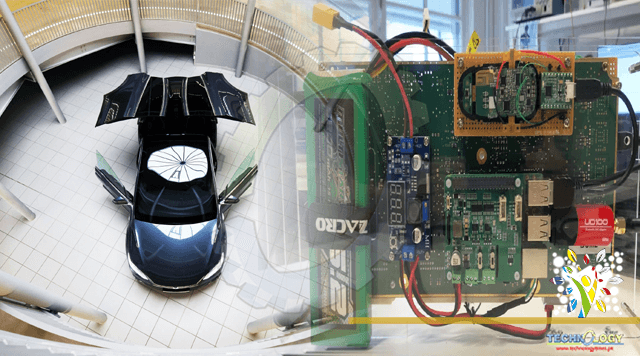
Tesla has always prided itself on its so-called over-the-air updates, pushing out new code automatically to fix bugs and add features. But one security researcher has shown how vulnerabilities in the Tesla Model X’s keyless entry system allow a different sort of update: A hacker could rewrite the firmware of a key fob via Bluetooth connection, lift an unlock code from the fob, and use it to steal a Model X in just a matter of minutes.