
Artificial intelligence is transforming cybersecurity by helping organizations detect threats faster, reduce manual workload, and improve response capabilities. As cyberattacks become more sophisticated, AI enables security teams to move from reactive defense to proactive protection.
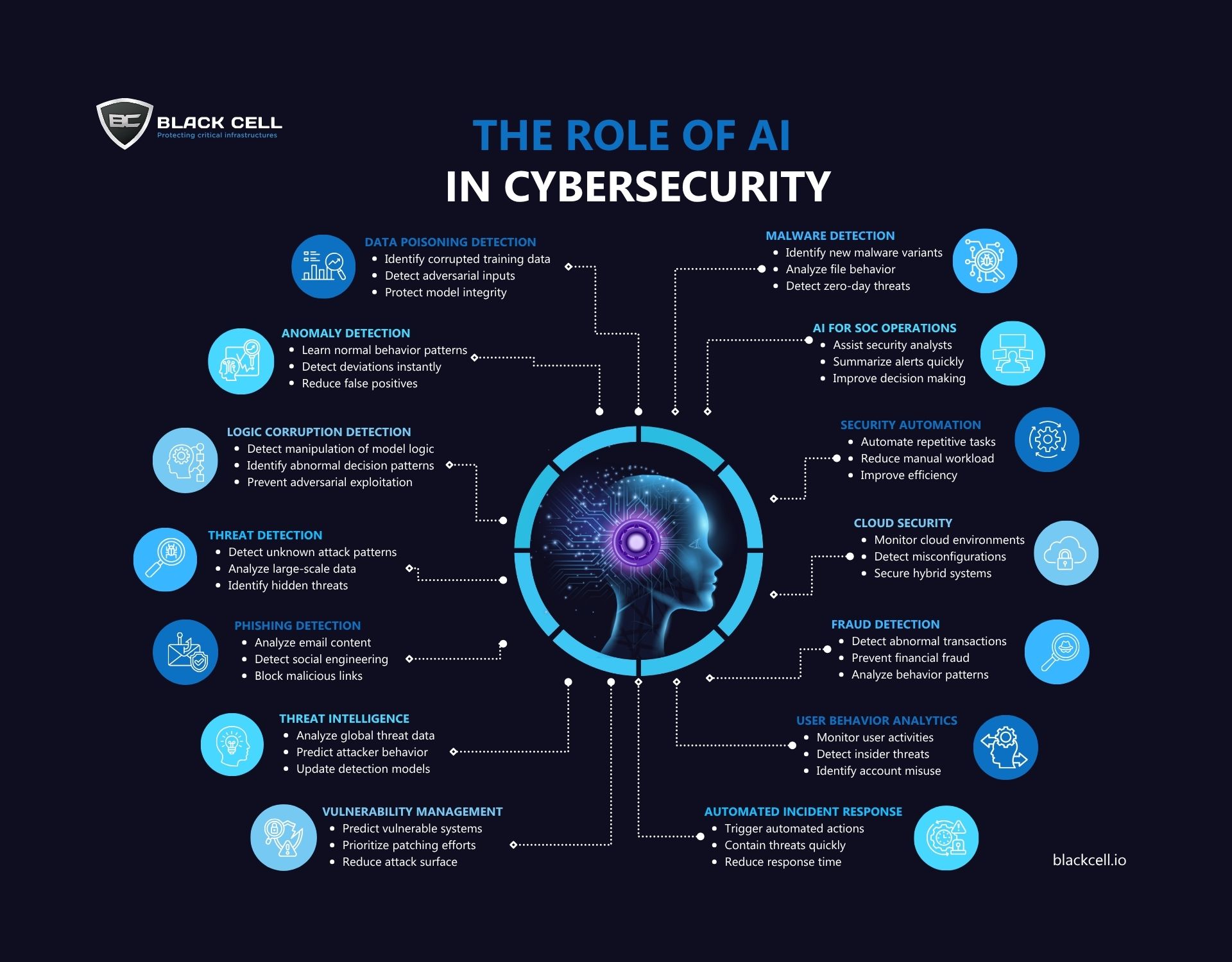
AI supports cybersecurity in many ways – from identifying malware variants and phishing attempts to detecting anomalies, insider threats, and suspicious behavior patterns. It also strengthens Security Operations Centers (SOCs) by helping analysts prioritize alerts, automate repetitive tasks, and accelerate incident response.
Beyond threat detection, AI improves vulnerability management, cloud security, fraud prevention, and threat intelligence by analyzing vast amounts of data and uncovering risks that traditional methods may miss.
While AI is not a replacement for cybersecurity professionals, it has become an essential force multiplier – helping organizations stay one step ahead in an increasingly complex threat landscape.
#ai #blackcell
Author

Tibor Luter
FUSION CENTER MANAGER
Related Posts
Detecting CVE-2020-1472 (CISA ED 20-04) Using Splunk Attack Range
Discussion around ATT&CK often involves tactics, techniques, procedures, detections, and mitigations, but a significant element is often overlooked: data sources. Data sources for every technique provide valuable context and opportunities to improve your security posture and impact your detection strategy.

Windows System Processes — An Overview For Blue Teams
The Windows operating system contains a lot of system processes that are present every time we boot our machines. These processes are responsible for a lot of things. From initialization and creating the user interface to loading the necessary drivers and DLL’s.