
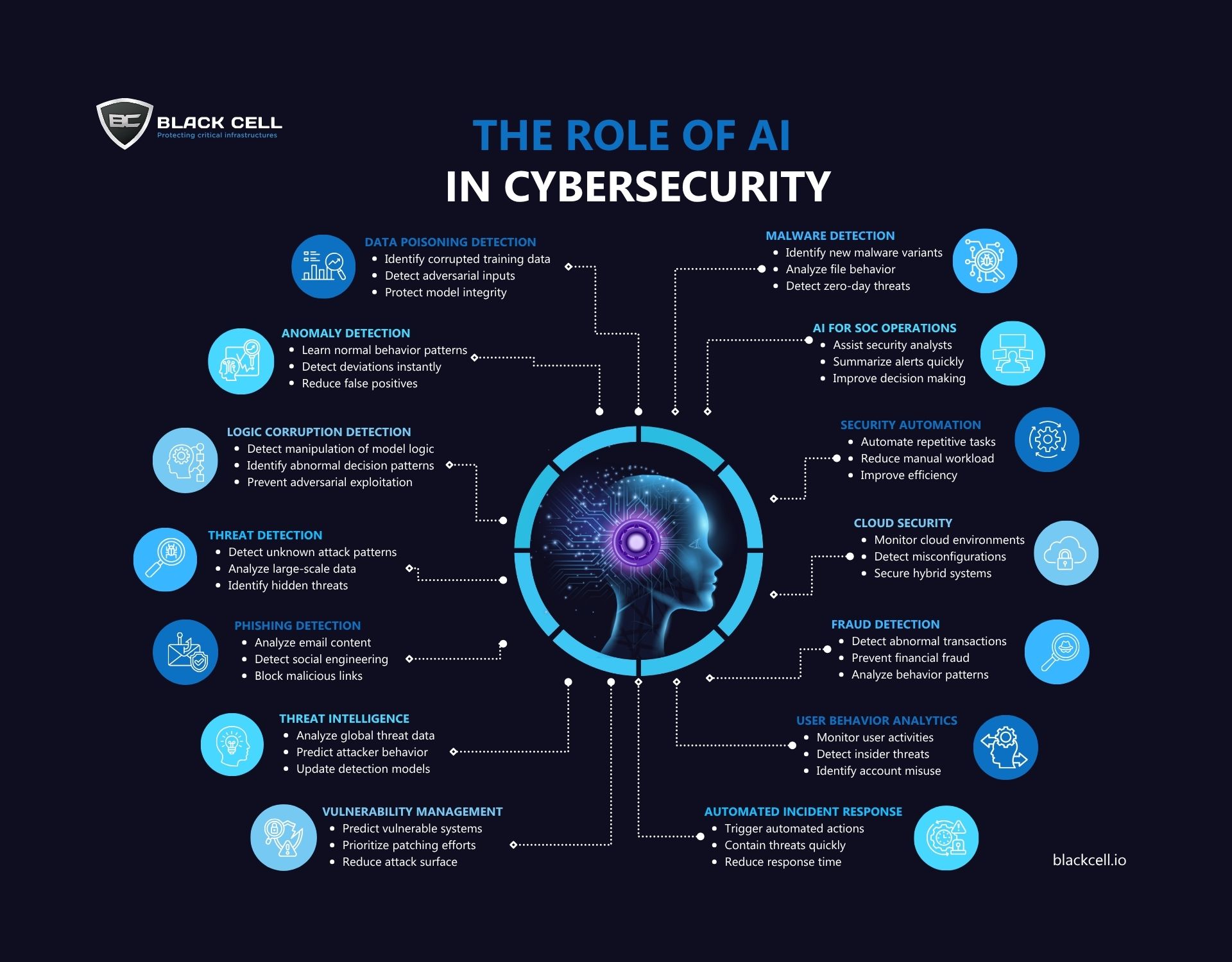
Artificial intelligence is transforming cybersecurity by helping organizations detect threats faster, reduce manual workload, and improve response capabilities. As cyberattacks become more sophisticated, AI enables security teams to move from reactive defense to proactive protection.
AI supports cybersecurity in many ways – from identifying malware variants and phishing attempts to detecting anomalies, insider threats, and suspicious behavior patterns. It also strengthens Security Operations Centers (SOCs) by helping analysts prioritize alerts, automate repetitive tasks, and accelerate incident response.
Beyond threat detection, AI improves vulnerability management, cloud security, fraud prevention, and threat intelligence by analyzing vast amounts of data and uncovering risks that traditional methods may miss.
While AI is not a replacement for cybersecurity professionals, it has become an essential force multiplier – helping organizations stay one step ahead in an increasingly complex threat landscape.
#ai #blackcell
Author

Tibor Luter
FUSION CENTER MANAGER
Related Posts

US Indicts Sandworm, Russia’s Most Destructive Cyberwar Unit
Nearly half a decade ago, the Russian hackers known as Sandworm hit Western Ukraine with the first-ever cyberattack to cause a blackout, an unprecedented act of cyberwar that turned off the lights for a quarter million Ukrainians. They were just getting started.

Making the most of XG Firewall v18 – Part 6
One of the great new features in XG Firewall v18 that we covered in Part 3 of this series is the new SD-WAN application and user-/group-based link selection capabilities. In this article, we’ll review how you can take advantage of those as a part of another new feature in XG Firewall v18: route-based IPsec VPN.