
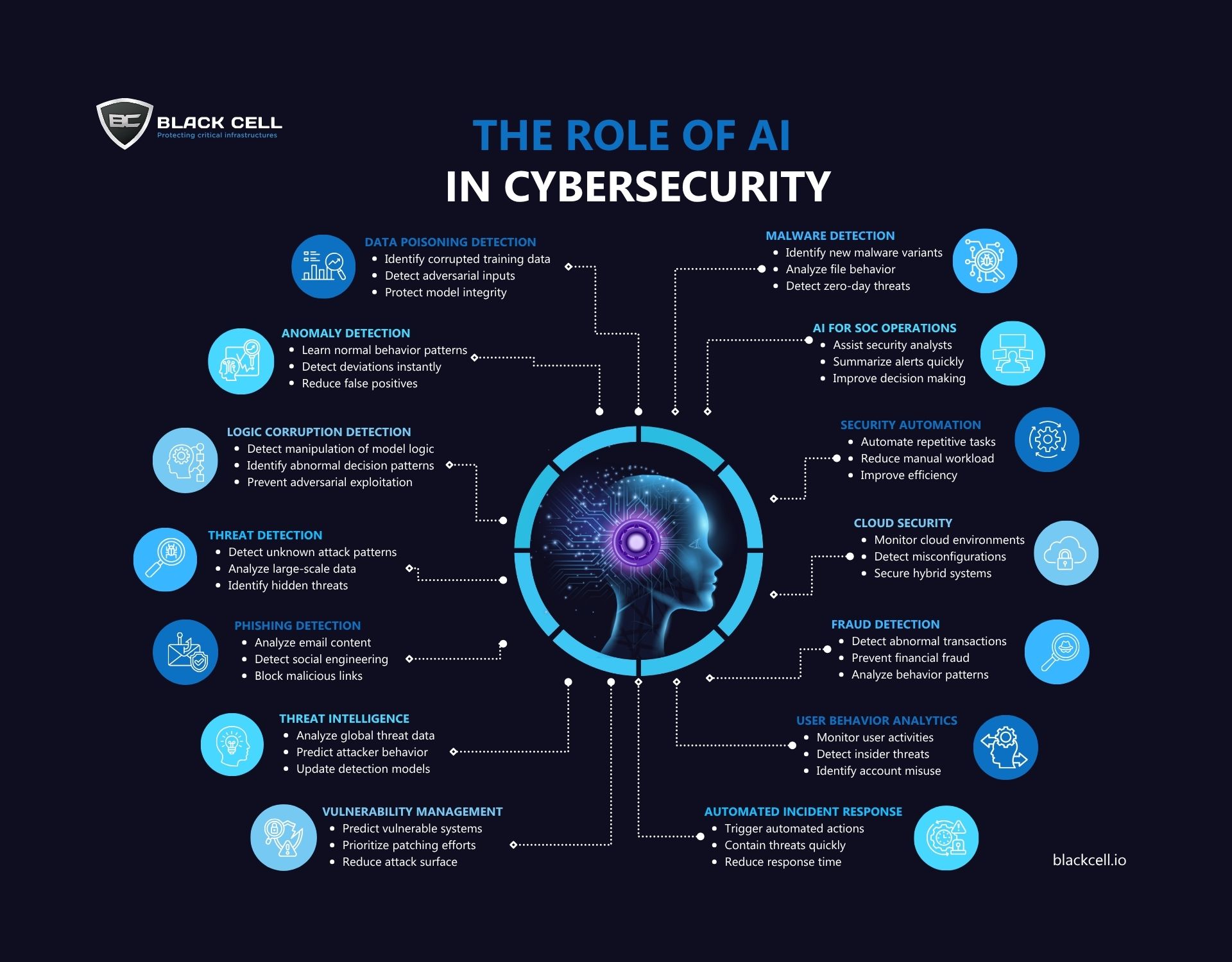
Artificial intelligence is transforming cybersecurity by helping organizations detect threats faster, reduce manual workload, and improve response capabilities. As cyberattacks become more sophisticated, AI enables security teams to move from reactive defense to proactive protection.
AI supports cybersecurity in many ways – from identifying malware variants and phishing attempts to detecting anomalies, insider threats, and suspicious behavior patterns. It also strengthens Security Operations Centers (SOCs) by helping analysts prioritize alerts, automate repetitive tasks, and accelerate incident response.
Beyond threat detection, AI improves vulnerability management, cloud security, fraud prevention, and threat intelligence by analyzing vast amounts of data and uncovering risks that traditional methods may miss.
While AI is not a replacement for cybersecurity professionals, it has become an essential force multiplier – helping organizations stay one step ahead in an increasingly complex threat landscape.
#ai #blackcell
Author

Tibor Luter
FUSION CENTER MANAGER
Related Posts

Making the most of XG Firewall v18 – Part 4
In The State of Ransomware 2020 report, over half the participating companies surveyed across 26 countries reported that they had been hit by ransomware in the past 12 months. This result demonstrates the critical need for predictive zero-day threat identification and protection as advanced threats like ransomware become more targeted and evasive.
Making the most of XG Firewall v18 – Part 3
In this third in a series of articles on making the most of the great new features in XG Firewall v18, we’re going to focus on the tools available to you to optimize your important business application traffic using the new Xstream Network Flow FastPath and the new SD-WAN Policy Based Routing options.