
Artificial intelligence is transforming cybersecurity by helping organizations detect threats faster, reduce manual workload, and improve response capabilities. As cyberattacks become more sophisticated, AI enables security teams to move from reactive defense to proactive protection.
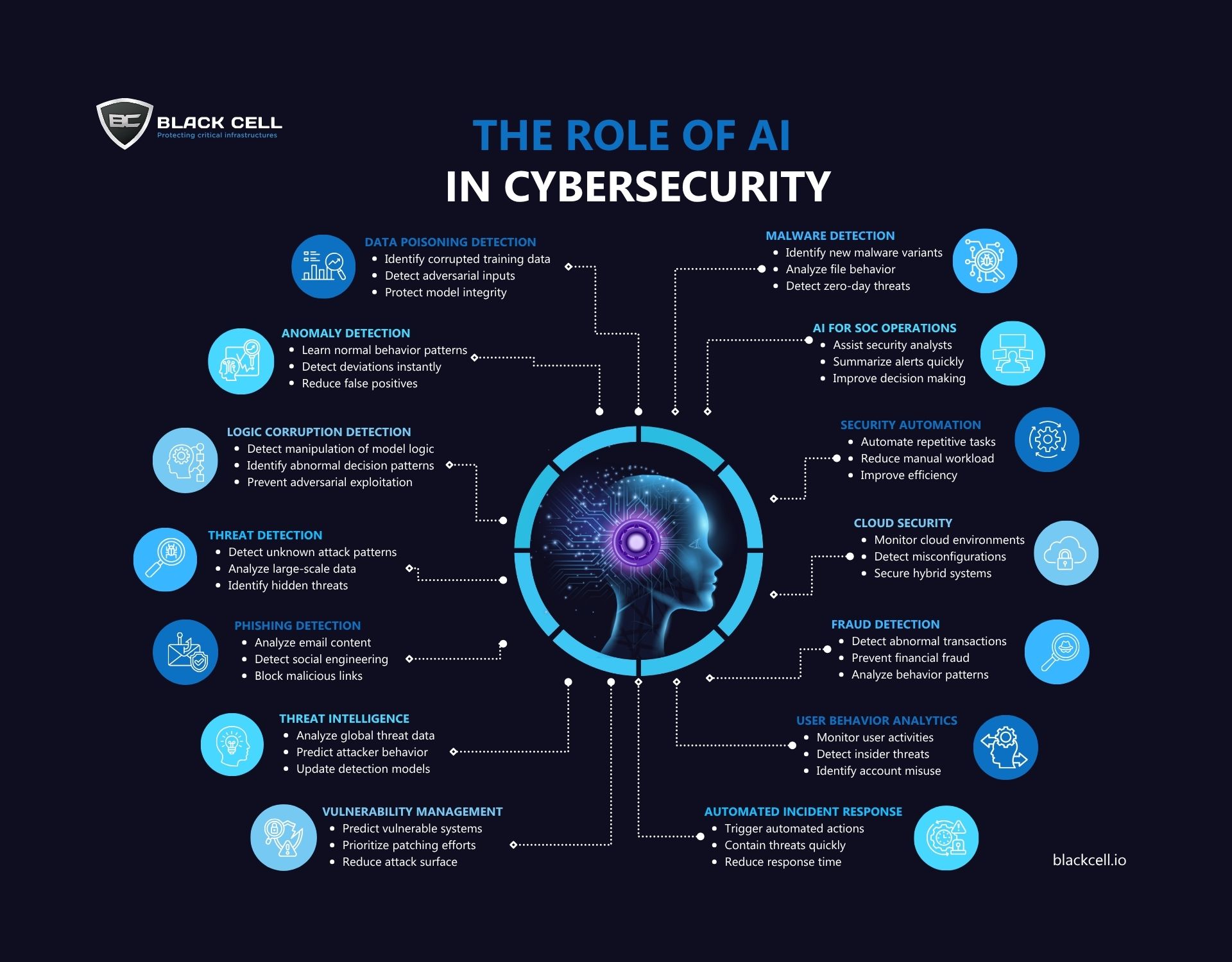
AI supports cybersecurity in many ways – from identifying malware variants and phishing attempts to detecting anomalies, insider threats, and suspicious behavior patterns. It also strengthens Security Operations Centers (SOCs) by helping analysts prioritize alerts, automate repetitive tasks, and accelerate incident response.
Beyond threat detection, AI improves vulnerability management, cloud security, fraud prevention, and threat intelligence by analyzing vast amounts of data and uncovering risks that traditional methods may miss.
While AI is not a replacement for cybersecurity professionals, it has become an essential force multiplier – helping organizations stay one step ahead in an increasingly complex threat landscape.
#ai #blackcell
Author

Tibor Luter
FUSION CENTER MANAGER
Related Posts

Cybersecurity: An All-Encompassing Organizational Responsibility
Today, the digital world is propelling connectivity and data growth to new heights. While their associated capabilities and information can give organizations a competitive advantage, these ever-evolving technologies can also expose critical infrastructure sectors to new threats that require cybersecurity mitigation measures.

The perfect storm: Finding new ways to navigate and mitigate the cybersecurity pandemic
A 2019 report released by the National Cyber Security Alliance (NCSA) showed just how devastating a cyberattack is to small and medium-size businesses.