
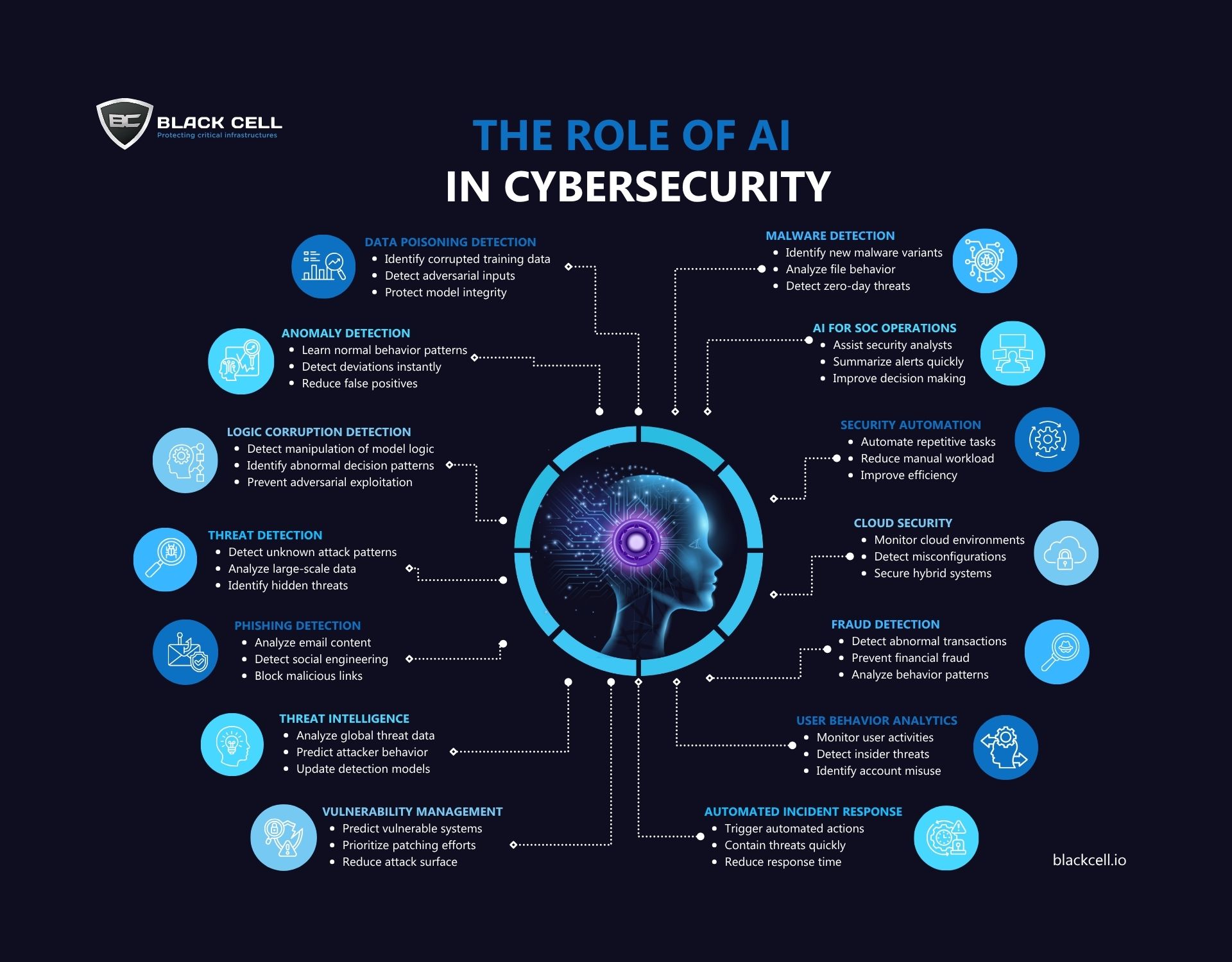
Artificial intelligence is transforming cybersecurity by helping organizations detect threats faster, reduce manual workload, and improve response capabilities. As cyberattacks become more sophisticated, AI enables security teams to move from reactive defense to proactive protection.
AI supports cybersecurity in many ways – from identifying malware variants and phishing attempts to detecting anomalies, insider threats, and suspicious behavior patterns. It also strengthens Security Operations Centers (SOCs) by helping analysts prioritize alerts, automate repetitive tasks, and accelerate incident response.
Beyond threat detection, AI improves vulnerability management, cloud security, fraud prevention, and threat intelligence by analyzing vast amounts of data and uncovering risks that traditional methods may miss.
While AI is not a replacement for cybersecurity professionals, it has become an essential force multiplier – helping organizations stay one step ahead in an increasingly complex threat landscape.
#ai #blackcell
Author

Tibor Luter
FUSION CENTER MANAGER
Related Posts
Beginners Guide to Scripting with the MDATP API
Microsoft Defender Advanced Threat Protection is an enterprise endpoint security platform designed to help organizations to prevent, detect, investigate, and respond to advanced threats. The platform offers API endpoints through which you can manage most aspects of your MDAPT instance. In this post we will be taking a look at a simple example of how we can utilize the MDATP API in a script.
Protecting data under Azure, with MCAS+AIP integration
Nowadays (and usually) the biggest challenge in Cybersecurity is not just to protect the organization from outsider threats, but to protect them from themselves. Internal threats can come in many shapes and sizes, from bypassing internal protection elements for browsing prohibited content, to deliberately sabotaging systems and leaking data.